Best Dutch Ovens for Sourdough Bread (2026)
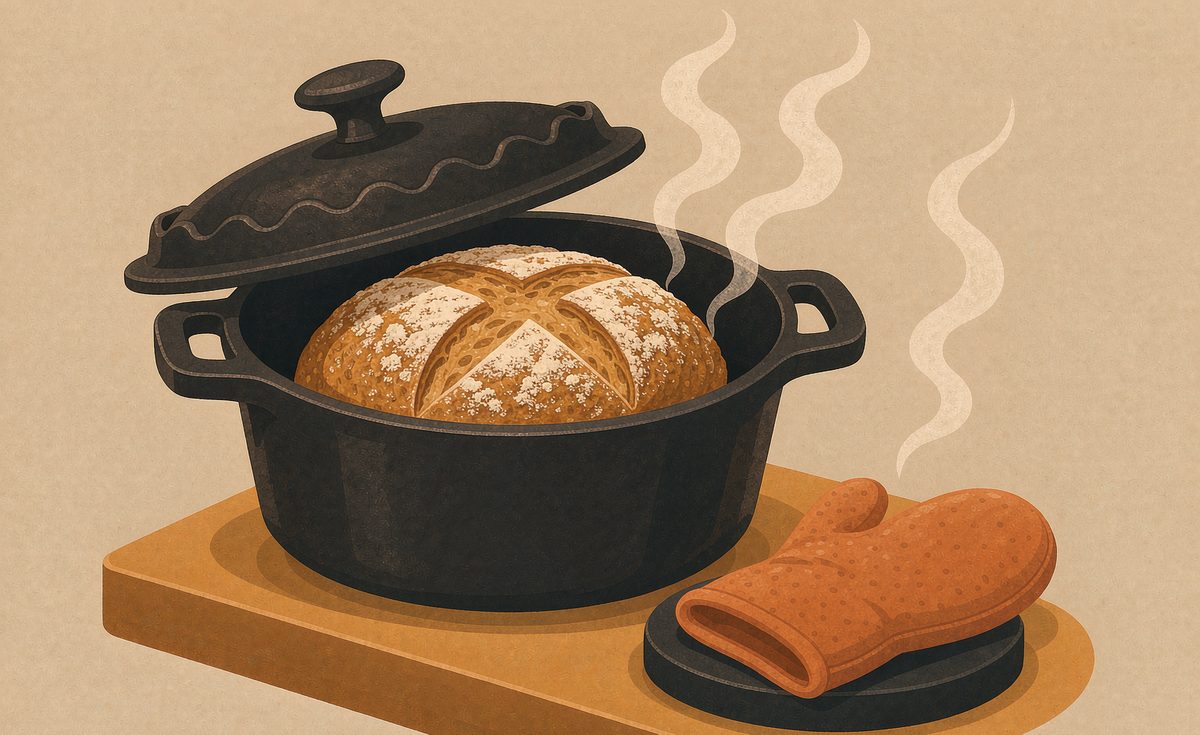
A dutch oven isn't an accessory for sourdough — it's the tool that turns a flat, pale slab into a tall, crackling loaf. The covered pot traps the steam released by the dough in its first minutes of baking, keeping the crust elastic long enough for oven spring, then comes off so the crust can brown. Any heavy covered pot does this; the differences between how well it does it, how easy it makes the dangerous part (dropping dough into a 475°F pot), and how much it costs are what this guide ranks.
Our picks at a glance
| Pot | Why it's here | Price band | Watch out for |
|---|---|---|---|
| Lodge Combo Cooker | Best for bread — the shallow half makes scoring and launching easy | ~$60–75 | Bare iron needs seasoning upkeep |
| Lodge Enameled Dutch Oven | Best budget all-rounder — bread today, stews tomorrow | ~$90–110 | Enamel can chip if abused |
| Le Creuset Round Dutch Oven | The splurge — if it does double duty for a decade | ~$300–450 | Knob temp rating; overkill for bread alone |
| Challenger Bread Pan | Bread-only perfectionist pick | ~$220–250 | Does nothing else; heavy; pricey |
1. Lodge Combo Cooker — the bread baker's standard
Lodge Cast Iron Combo Cooker (3 qt + 2 qt)
This is the pot most sourdough bakers settle on after owning everything else. It's pre-seasoned bare cast iron — no enamel to chip — and its genius is the two halves: the shallow skillet half is where you score and launch the dough, which is dramatically easier than lowering dough into a deep pot, and the deep half becomes the lid. It traps steam like a purpose-built bread oven at a fifth of the price, and when you're not baking, both halves are usable cookware.
Watch out for: bare iron needs a light hand — acidic dough left to cool in it can strip seasoning, and it must be dried bone-dry after washing or it flashes rust. Neither is hard; both are new habits.
Check price on Amazon2. Lodge Enameled Dutch Oven — bread plus a life
Lodge Enameled Cast Iron Dutch Oven (6 qt)
If your kitchen budget buys one pot that must bake bread and cook for a household, this is it: enameled cast iron that traps steam as well as the bare version, in a 6-quart size that fits a standard boule with room to spring. It costs a fraction of the French brands and cleans up like a nonstick pot — no seasoning ritual.
Watch out for: enamel is glass; metal utensils and thermal shock can chip it. And like every deep pot, dropping a 475°F-hot loaf into it is the nerve-wracking part — go with the combo cooker above if bread is the priority.
Check price on Amazon3. Le Creuset Round Dutch Oven — the decade purchase
Le Creuset Signature Round Dutch Oven (5.5 qt)
Le Creuset bakes bread beautifully — enameled cast iron traps steam identically to the cheap stuff. What you're paying for is lifetime durability, even heating, and a pot that earns its shelf space cooking everything else for twenty years. If it does double duty in your kitchen, the per-loaf cost pencils out; if it's bread-only, it doesn't.
Watch out for: the knob. Check your knob's temperature rating before a 475°F preheat — the classic glass knobs crack around 390–450°F, while the newer metal Signature knobs handle 500°F. And preheating an empty enamel pot is its own risk; some owners bake with a cold-start method instead.
Check price on Amazon4. Challenger Bread Pan — when bread is the whole job
Challenger Bread Pan
Purpose-built for exactly one job: a deep, low-sided covered cast-iron chamber shaped like a loaf, so you get maximum steam and a batard-shaped result without the awkward deep-pot launch. Serious weekly bakers who've outgrown the combo cooker's round loaf tend to land here. It's the last bread vessel many people buy.
Watch out for: it's a one-trick pony — $220+ that bakes bread and does nothing else, and it's heavy enough to make the combo cooker look light. Buy it only if bread is a weekly ritual, not a hobby.
Check price on AmazonWhat actually matters in a bread dutch oven
- Steam trapping. A heavy, tight-fitting lid is the whole point — it converts the loaf's own moisture into a steam bath for the first 20 minutes. Cast iron and enameled cast iron both do this; thin stainless and glass-lid pots lose steam.
- Thermal mass and preheat. The pot must hold 450–475°F heat when the cold dough hits it, so it preheats empty in the oven for 30–45 minutes. A thin pot sags on contact and kills oven spring.
- Knob temperature rating. Before buying or using any pot, check the lid knob's max temperature. Many enameled lids ship with knobs rated below sourdough temperatures — swap to a metal knob or choose a model rated to 500°F.
- Easy launch geometry. The most dangerous moment in bread baking is lowering raw dough into a screaming-hot deep pot. Shallow halves (combo cookers, low-sided bread pans) turn that risk into a non-event.
Frequently asked questions
Do I really need a dutch oven for sourdough?
For tall loaves with crackling crusts, yes — the covered pot traps the steam that drives oven spring. Without one you can improvise with a deep covered roaster or steam tray, but results get less consistent. The Lodge combo cooker is the cheapest reliable fix at about $60.
What's the best dutch oven for a beginner baking sourdough?
The Lodge combo cooker: pre-seasoned, no enamel to chip, and the shallow half makes scoring and launching far easier than a deep pot. Around $60, it's the highest-leverage first purchase for bread.
Can I bake sourdough in an enameled dutch oven like Le Creuset?
Yes. Enameled cast iron traps steam as well as bare. Two checks: the knob must be rated for your bake temperature, and avoid thermal shock from over-aggressive preheating. Bread alone doesn't justify the price, but if you own one, it's excellent.
Combo cooker or regular dutch oven for bread?
Combo cooker, for bread specifically: launching and scoring from the shallow half is dramatically safer and easier, and the deep half becomes the lid. Regular round pots work but require lowering dough into a deep, dark, 475°F well.
What size dutch oven do I need for one sourdough loaf?
5–6 quarts fits a standard 1,000-gram loaf with spring room. Smaller pots squeeze taller loaves; bigger ones let loaves spread wider and flatter. One loaf at a time → 6 quart is the sweet spot.
How this guide stays honest
Picks are built from owner-consensus research, oven-science reasoning, and price checks from September 2026. No pot on this page is claimed as tested until our units arrive — when they do, each gains same-recipe crumb comparisons, thermal measurements, and a "tested on" date. Confirm prices on Amazon before buying.
Next read: How to choose a bread machine → · Best bread makers for beginners → · Best small bread machines →