How to Clean a Bread Machine: The Routine That Saves the Pan
Ask any long-term bread machine owner what finally killed their first machine and the answer is rarely the motor. It's the pan: coating peeled, paddle seized, smells baked into the corners. Cleaning a bread machine is a ten-minute job — and doing it wrong is the fastest way to turn a $300 machine into a $30 problem. This is the routine we recommend, the mistakes that end pans, and the fixes for the smells and spots manuals ignore.
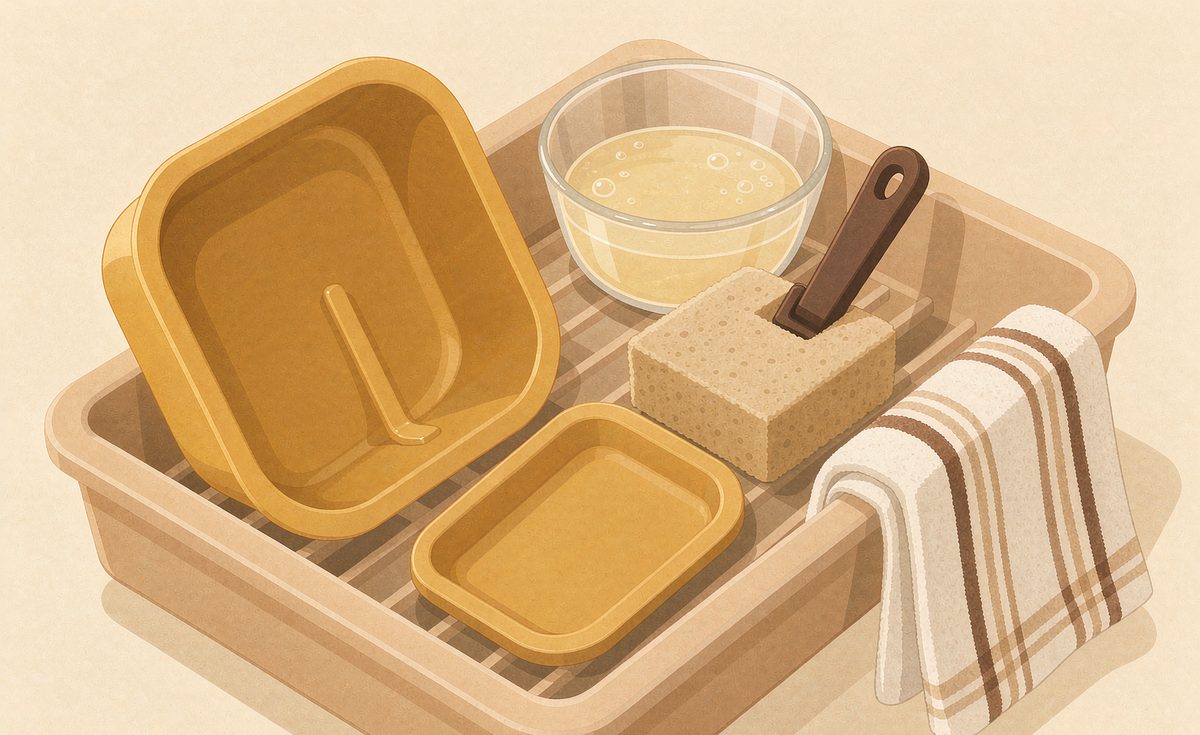
What needs cleaning, and how often
| Part | Frequency | Method |
|---|---|---|
| Bread pan | After every bake | Hand-wash warm, soapy water; dry before storing |
| Kneading paddle | After every bake | Same wash; reattach to the pan so you don't lose it |
| Body & lid window | Every few bakes | Wipe with a barely-damp cloth |
| Interior cavity / heating area | Every few bakes | Brush out crumbs; wipe residue when cool |
| Vent | Monthly | Soft brush or vacuum with a brush attachment |
The after-every-bake routine (5 minutes)
- Wait for the pan to cool. Never run a hot pan under cold water — thermal shock is one of the ways nonstick coatings delaminate. Ten minutes on a rack is enough.
- Remove the pan and paddle. Lift the pan out, then pull the paddle off its shaft. If the paddle is stuck, fill the pan with warm water and soak briefly — don't pry with metal.
- Hand-wash with warm soapy water. A soft sponge or cloth is all the nonstick coating wants. For crusty residue around the paddle shaft, a soft-bristled brush (an old toothbrush works) reaches where fingers can't.
- Rinse and dry completely. Standing water in the pan breeds musty smells and, on some machines, corrodes the shaft. Dry with a towel and leave the pan out of the machine until fully dry.
- Wipe the interior cavity. With the pan out, brush crumbs off the heating element area with a dry pastry brush or a cloth. Don't use water inside the machine body.
That's it. Five minutes after every loaf, and the pan's coating — the single most expensive part of the machine — survives for years. The full troubleshooting guide covers what to do when a loaf still sticks despite clean pans.
The four mistakes that kill bread machine pans
- The dishwasher. Unless your manual explicitly allows it, the pan and paddle are hand-wash only. Dishwasher detergent is abrasive and the heat cycle attacks nonstick coatings. This is the #1 cause of "my pan started peeling."
- Metal utensils and abrasive scrubbers. A scratched coating isn't just ugly — bread sticks to the scratches, and if the coating is PTFE-family, scratches are where it starts shedding. Use silicone or plastic tools and a soft sponge. (Coating types and why PFAS-free pans are worth preferring are covered in our buying guide.)
- Soaking the whole pan overnight. A 15–30 minute soak loosens crust. Overnight soaking works its way past the coating edges and into the pan's metal and shaft, which corrodes and rusts.
- Storing the machine with the pan inside and lid closed. Any residual moisture turns into a musty smell that then bakes into your next loaf. Store the pan dry, or leave the lid cracked.
Getting off the hard stuff
Burned-on dough or old oil: fill the pan halfway with warm water and a drop of dish soap, soak 15–30 minutes, then wipe. For stubborn spots, a paste of baking soda and water on a soft sponge usually lifts them without scratching. Metal scrapers are never the answer.
Stuck paddle: warm water soak, then grip the paddle base with a dry cloth and twist gently. If it still won't move, run the machine's dough cycle with just water for two minutes — the agitation usually frees it.
Smells in the machine: old oil on the heating element is the usual culprit. With the pan removed, wipe the cavity with a barely-damp cloth, then run an empty bake-only cycle (if your machine has one) to burn off residue. A slice of bread in the machine won't fix the smell — removing the source will.
When to replace the pan or paddle
Inspect the pan coating every few months. If it's flaking, peeling, or scratched down to bare metal, replace it — a worn pan makes bread stick, brown unevenly, and (with PTFE-family coatings) is no longer food-safe to trust. Good news: replacement pans and paddles are sold for every major machine, which is one reason we weight brand parts support so heavily in reviews. A $30–50 replacement pan beats a $300 replacement machine.
A cleaner that keeps pans alive
Soft-bristle brushes & plastic scrapers
The only tools a nonstick pan should ever meet: a soft sponge, a narrow brush for the paddle shaft, and a plastic scraper for crusty edges. Any kitchen supply set covers it — no specialty gadgets required.
Find pan-safe cleaning tools on AmazonReplacement pan & paddle for your model
If your pan's coating is past saving, search your exact model — replacement pans run far cheaper than a new machine and restore it like new. Model number is on the underside or back of the machine.
Search replacement pans on AmazonStill shopping instead of scrubbing? Cleaning frequency and parts availability are baked into our rankings — start with the beginner shortlist or the under-$100 picks if budget's the constraint.
Frequently asked questions
Do I have to wash the pan after every loaf?
Yes — residual oil turns rancid, crumbs burn onto the next bake, and a dirty pan is the most common cause of off-tasting second loaves. It's a five-minute hand-wash.
Is it OK to use vinegar to clean a bread machine?
Vinegar is fine on the exterior and cavity in small amounts, but keep it away from the pan's nonstick coating and never soak the pan in it — acids can attack coating edges over time. Warm soapy water is all the pan needs.
How do I remove the smell of burned bread from the machine?
Remove the pan, brush and wipe the cavity and heating element area, then run an empty bake-only cycle to burn off residue. If the smell persists, check for crumbs trapped under the pan and around the paddle shaft.
Can I wash the bread machine pan with the paddle attached?
You can, but it's better to detach them: washing them separately lets you clean the shaft and the paddle's underside — where dough collects — properly.
Next read: Bread machine troubleshooting → · Bread machine recipes → · How to choose a bread machine →