The White Sandwich Bread Recipe for Your Bread Machine
Every bread machine owner eventually wants the same thing: a soft, sliceable white loaf that tastes like the bakery's, made overnight. It's the most-baked recipe in bread machines for a reason — and it's also where owners discover that a machine is only as good as the recipe you feed it. This is that recipe: the weight-based white sandwich loaf, with the two ingredients most recipes leave out (milk powder and butter) and the exact order that keeps yeast happy.
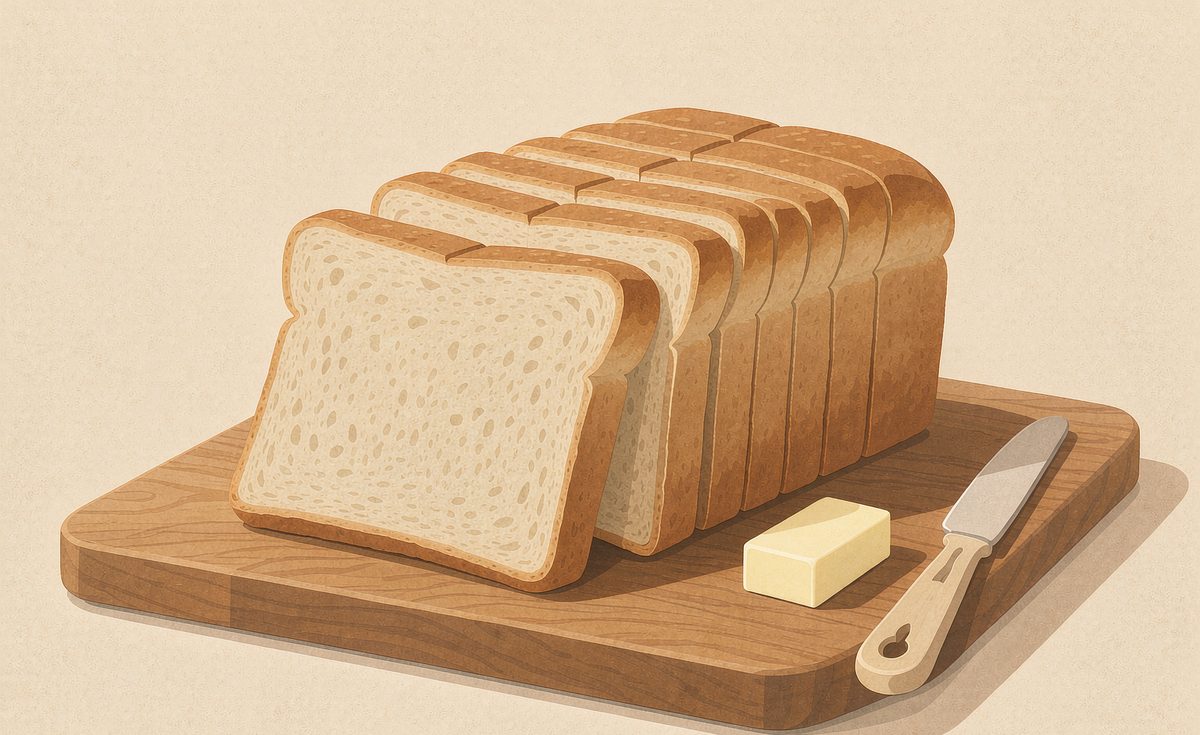
The recipe (2-lb loaf, any machine)
| Ingredient | Weight | Why it's here |
|---|---|---|
| Water (room temp) | 345 g | ~60% hydration — the ratio that works in vertical and horizontal pans alike |
| Bread flour | 600 g | Bread flour's higher protein makes the soft, tall crumb |
| Dry milk powder | 24 g | The secret sandwich ingredient — dairy depth + softer crumb + better browning |
| Sugar | 24 g | Feeds yeast and sweetens the crumb; honey works too |
| Salt | 11 g | Never skip — controls rise and carries flavor |
| Butter (or oil) | 28 g | Softens crumb, adds flavor, extends freshness a day or two |
| Instant yeast | 7 g | Bread-machine / instant yeast — not active dry |
Note on water: this recipe uses 345 g water because the milk powder absorbs some. If you skip the milk powder, return to 360 g. Weigh everything — a 20% flour variance from cup scooping is the #1 cause of dense machine loaves.
Method: order matters
- Liquids first. Water, then butter (softened or melted) — into the pan.
- Dry on top. Flour, then milk powder and sugar, covering the liquid completely.
- Salt and yeast apart. Salt in one corner of the flour, yeast in a small well in the center on the opposite side. Direct salt-yeast contact kills the yeast's rise before it starts.
- Select basic/white cycle, 2-lb, medium crust. If you bake overnight, set the delay timer — this dough handles a delayed start well because the yeast sits dry until mixing begins.
- Peek at 5–10 minutes. The dough should form a smooth, slightly tacky ball. Too dry and cracking → add water a tablespoon at a time. Sticking to the walls → add flour a tablespoon at a time.
- Cool completely. When the cycle finishes, remove the pan, shake the loaf onto a wire rack, and wait at least 60–90 minutes before slicing. This is the step most people rush — and the reason their first loaf seemed gummy.
Variations that stay in the 60% hydration family
- Milk bread: replace half the water with whole milk (scalded and cooled) — softer, richer, better-browning crumb. Slightly shorter shelf life.
- Egg-enriched: replace 50 g of water with one beaten egg and add 15 g more butter — a taller, cakier sandwich loaf.
- Honey oat: swap the sugar for honey and fold 40 g of rolled oats into the flour — add 15 g water to compensate.
- Raisin swirl: add raisins at the beep (or via your machine's dispenser) — never at the start, or they get crushed in the first knead.
If it still comes out wrong
The two machine-specific failures and their fixes:
- Dense, squat loaf: under-hydrated or under-proofed. Confirm you weighed the flour, check the yeast is fresh (rapid-rise or expired yeast both cause this), and use the basic cycle's full program rather than a rapid cycle.
- Crumbly, dry loaf: over-floured. Cut 15 g of flour next time (or add 15 g water) and re-check at the 5-minute knead.
For a full catalog of failures — sunken tops, burnt crusts, stuck paddles, the lot — our troubleshooting guide has 12 diagnosed fixes. If your machine itself is the problem rather than the recipe, the shortlist and budget guide are where to start over.
Tools that make this loaf repeatable
Digital kitchen scale (0.1 g)
This recipe is a ratio game: 600 g of flour scooped as cups can silently become 720 g. A scale removes the variable, and it's the same tool behind every recipe on this site.
Check kitchen scales on AmazonDry milk powder
One small bag upgrades every white loaf you'll ever bake in the machine — dairy depth, softer crumb, better crust color. Keep it in the pantry next to the flour.
Check milk powder on AmazonNew to the machine? Our beginner guide picks machines that forgive first loaves, and the base formulas page is the pared-down version of this recipe for memorizing.
Frequently asked questions
Can I use all-purpose flour instead of bread flour?
Yes, but expect a slightly shorter, softer loaf — all-purpose has less protein, so the crumb is tenderer but rises a bit less. If using all-purpose, you can add 1 tbsp of vital wheat gluten to restore structure. More in our whole wheat guide.
Why does my bread machine loaf have a hole in the bottom?
That's the kneading paddle — every loaf from a single-paddle machine has one. Machines with collapsible paddles (like the Breville Custom Loaf) leave only a small indentation. It's cosmetic; the slice hides it.
How do I store bread machine white bread?
Room temperature in a paper bag or bread box for 2–3 days, cut-side down on a board if you lack a bag. Never refrigerate — it stales faster. Freeze slices in a zip bag for toast on demand.
Can I double this recipe for a 3-lb machine?
This recipe is tuned for a 2-lb pan. For a 3-lb machine, scale by 1.5× (900 g flour, 520 g water, etc.) and use the largest loaf setting — but confirm your pan's rated capacity first. See our capacity guide.
Next read: Bread machine base recipes → · Whole wheat recipe → · Best bread maker shortlist →